

Fiscovyn: From Billing to Fiscal Clearance
TECHNOLOGIES
ABOUT
A digital invoicing middleware that connects existing billing workflows with FBR / PRAL submission, invoice validation, fiscal response capture, and QR-enabled customer receipts.
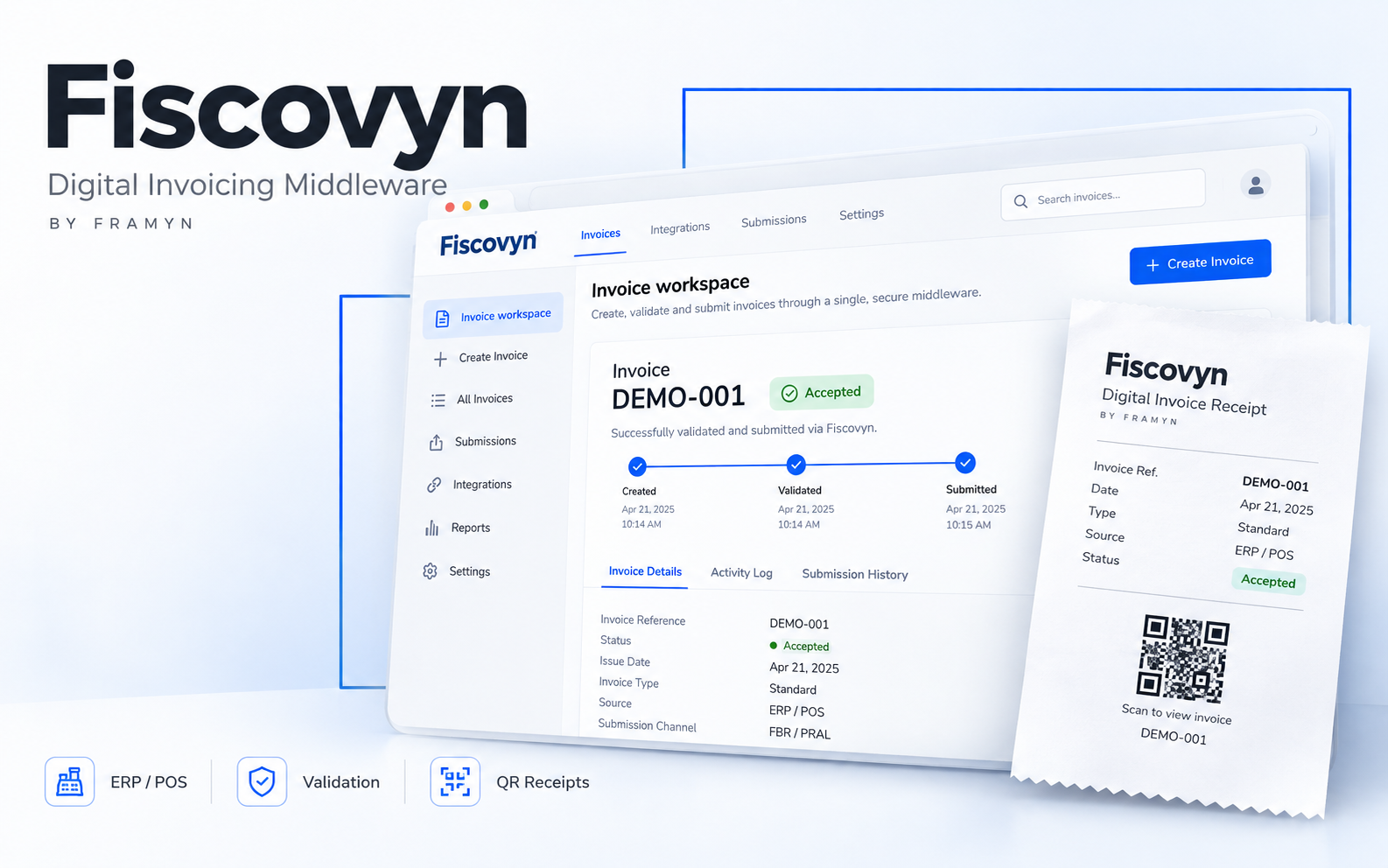
CLIENT
ERP, POS & custom billing integrations (client not disclosed)
MY ROLE
Product & Integration Engineer, designing the validation, fiscal submission, and document generation workflow.
DURATION
Timeline not disclosed
TOOLS
0%
OVERVIEW
Businesses already rely on ERP, POS, and custom billing applications to create sales. Digital invoicing introduces another responsibility: each transaction must be prepared for submission, checked for consistency, sent to the fiscal gateway, and linked to its response.
Fiscovyn sits between those systems and the FBR / PRAL gateway, bringing validation, tax-context handling, submission, and document generation into a coordinated workflow, while staff continue creating invoices in their existing billing application.
THE PROBLEM
An invoice that appears complete in a billing system may still contain missing fields, inconsistent totals, or incorrect buyer context in its fiscal payload. Submission errors become harder to resolve when the operator receives a technical gateway response without a clear next step.
After submission, traceability matters just as much as the original transaction. Teams need to know what was sent, what the gateway returned, which fiscal reference belongs to the invoice, and which final document was produced, without turning every transaction into a manual reconciliation exercise.
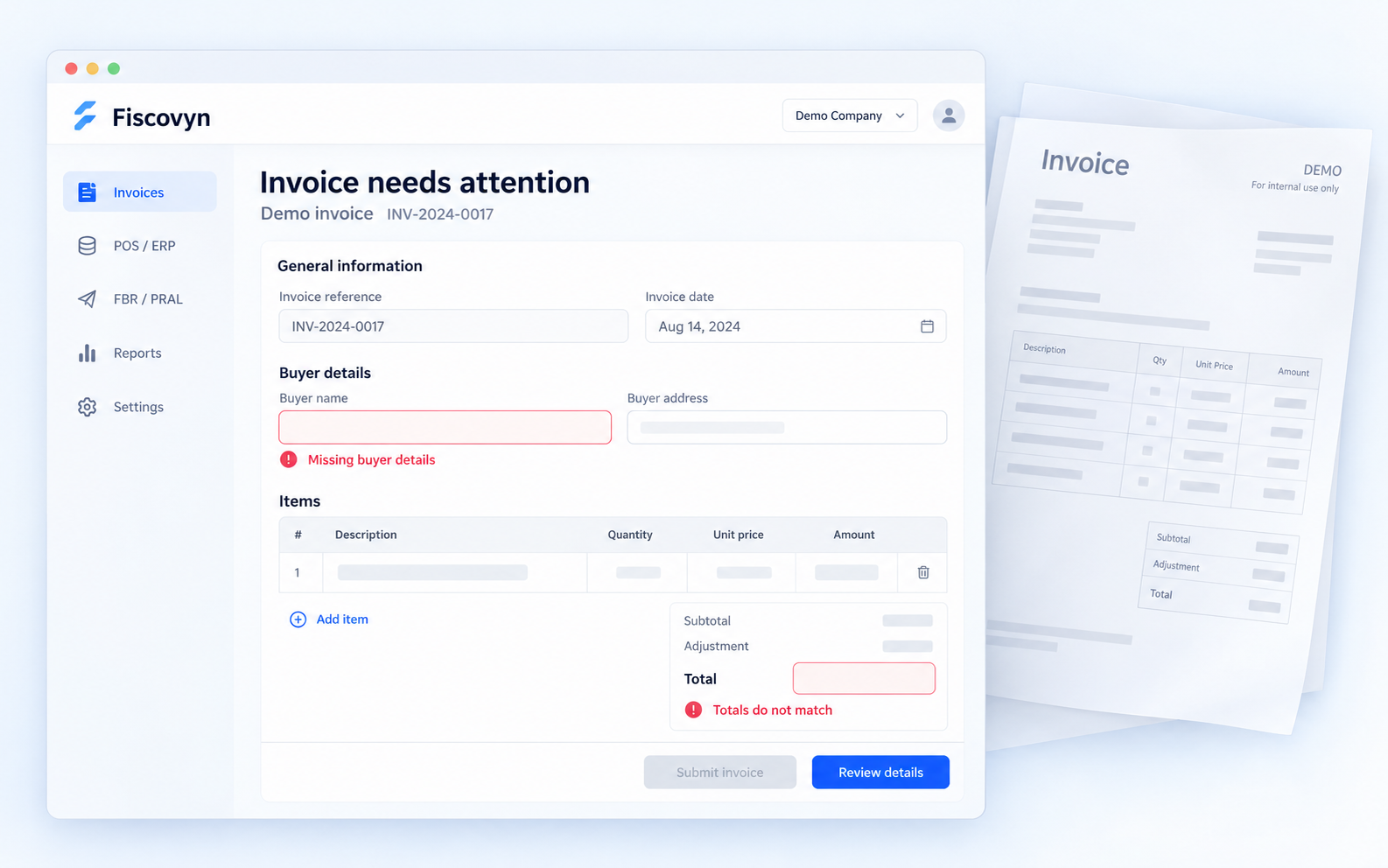
Legacy state diagnostic & bottleneck mapping for Fiscovyn.
FIG 01 // DIAGNOSTIC
HOW WE FRAMED THE IDEA
The product direction was to create an abstraction layer that handles the fiscal work around a transaction while the billing operator stays inside the normal sales process, identifying local validation issues, applying the configured tax logic, and distinguishing an accepted result from a failure requiring attention.
The user experience follows the transaction's state: before submission, the operator receives actionable validation feedback; after submission, the application records the returned outcome; after acceptance, the fiscal record is locked and the final receipt can be produced.
ARCHITECTURAL THESIS
“A familiar sales action should lead to a clear fiscal outcome and a traceable final record.”
THINK & BUILD
The design centers on five focused modules: a pre-flight engine that checks amounts, discounts, taxes, and line totals before submission; taxpayer verification that uses FBR lookup services to identify buyer registration status; and an environment pipeline that separates sandbox behavior from production payload preparation.
A credit/debit lifecycle module links adjustments to the original fiscal invoice with value controls, while a PDF and QR engine produces customer-ready invoice output with the fiscal reference and verification information associated with the accepted transaction.
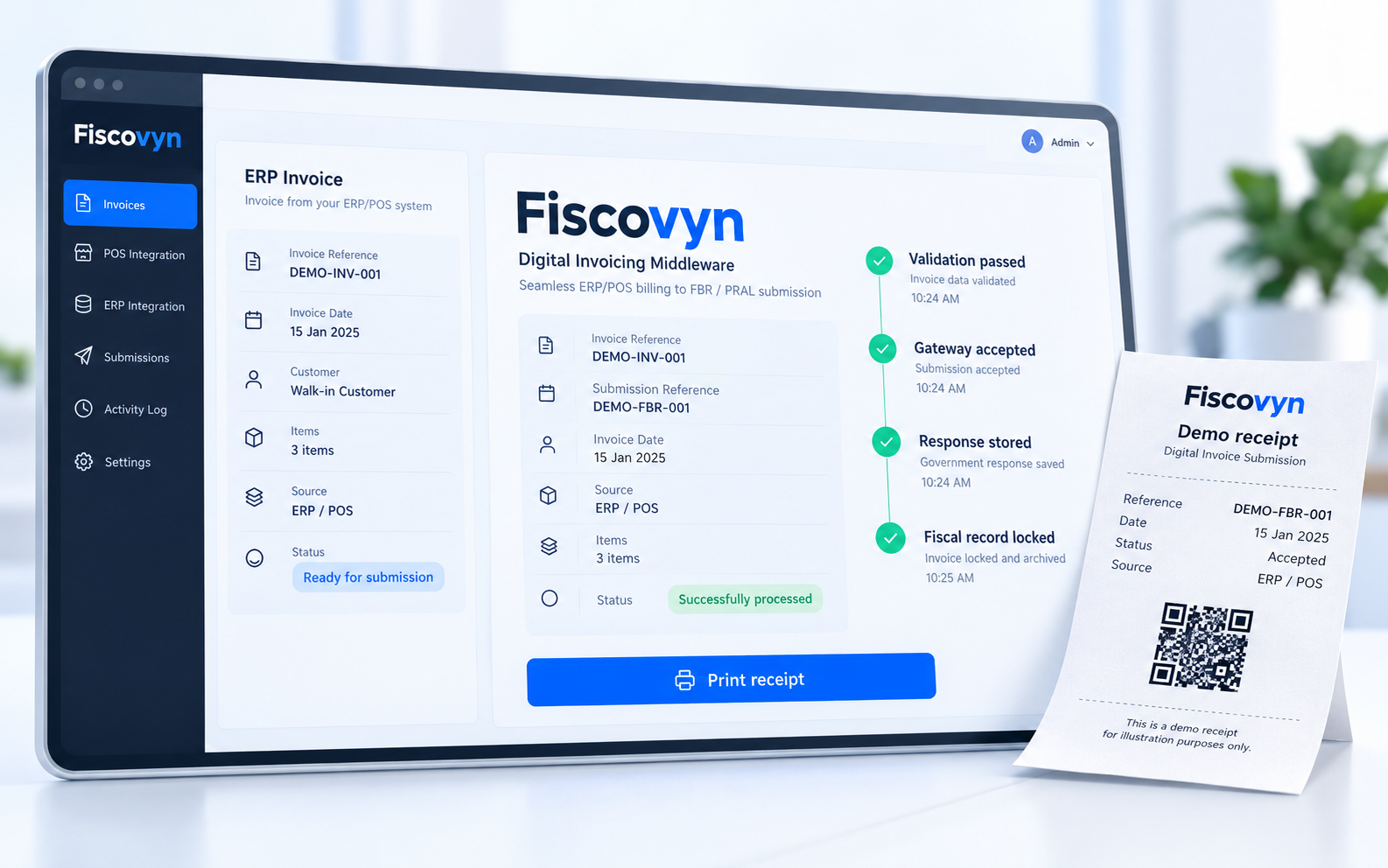
System architecture and workflow execution for Fiscovyn.
FIG 02 // BUILD SPEC
THE SOLUTION
Fiscovyn connects invoice creation to validation, submission, response capture, and final document generation. The business creates a sale as usual, while the middleware handles the fiscal processing around it, local checks identify common issues before submission, the gateway response is captured and associated with the invoice, and once accepted, the fiscal record is locked and a customer-ready PDF or QR-enabled receipt is generated.
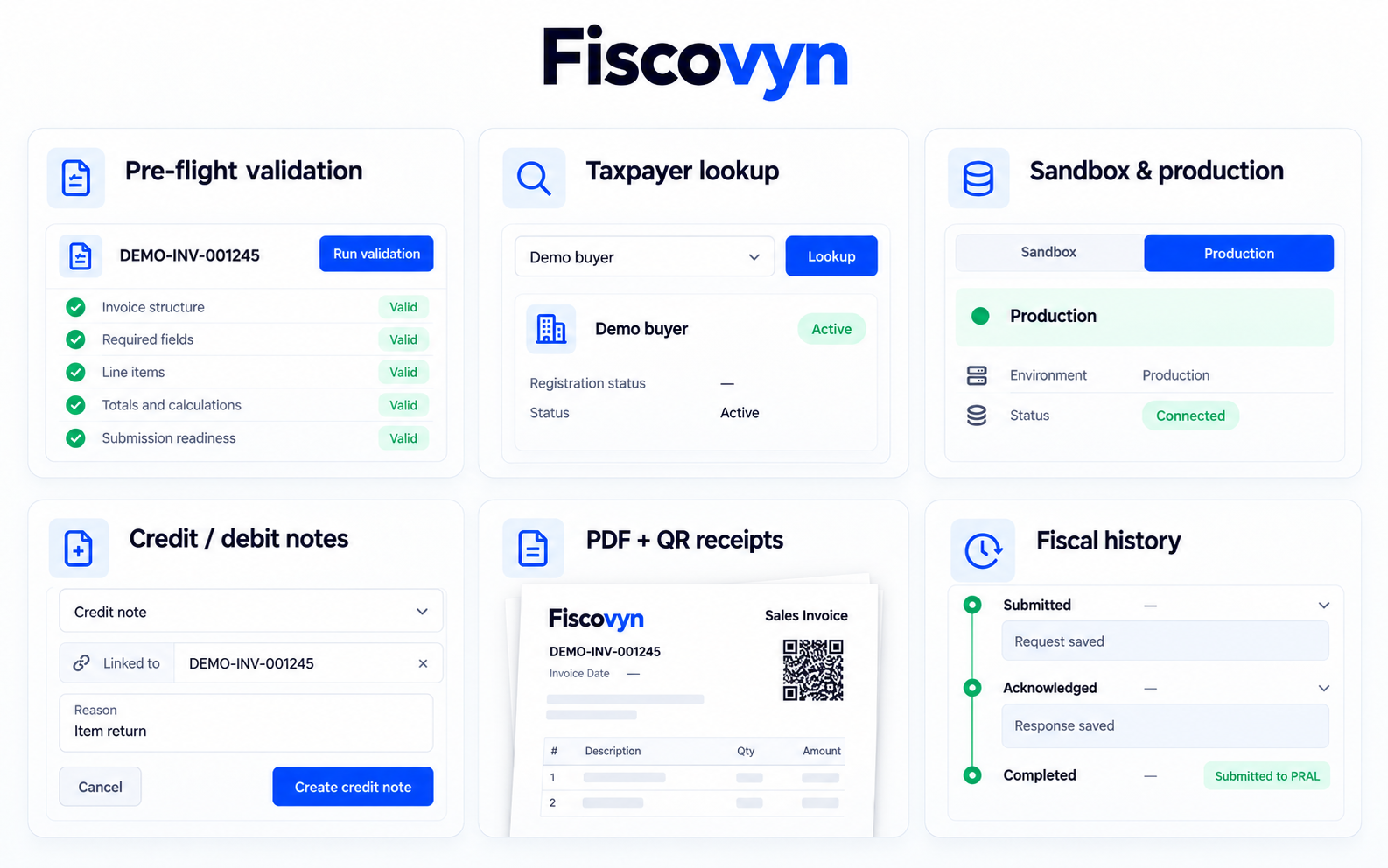
Fiscovyn: Product interface and fiscal workflow overview.
FIG 03 // PRODUCTION
NEXT CASE STUDY (7/9)