

Framora: Photorealistic Architecture, Interactive on the Web
TECHNOLOGIES
ABOUT
Framora is a SaaS concept by FRAMYN that turns pre-rendered architectural image sequences into interactive browser presentations. Upload a full orbit of a building, let clients rotate through its rendered viewpoints, and explore a planned path from free building rotation to richer, custom property experiences.
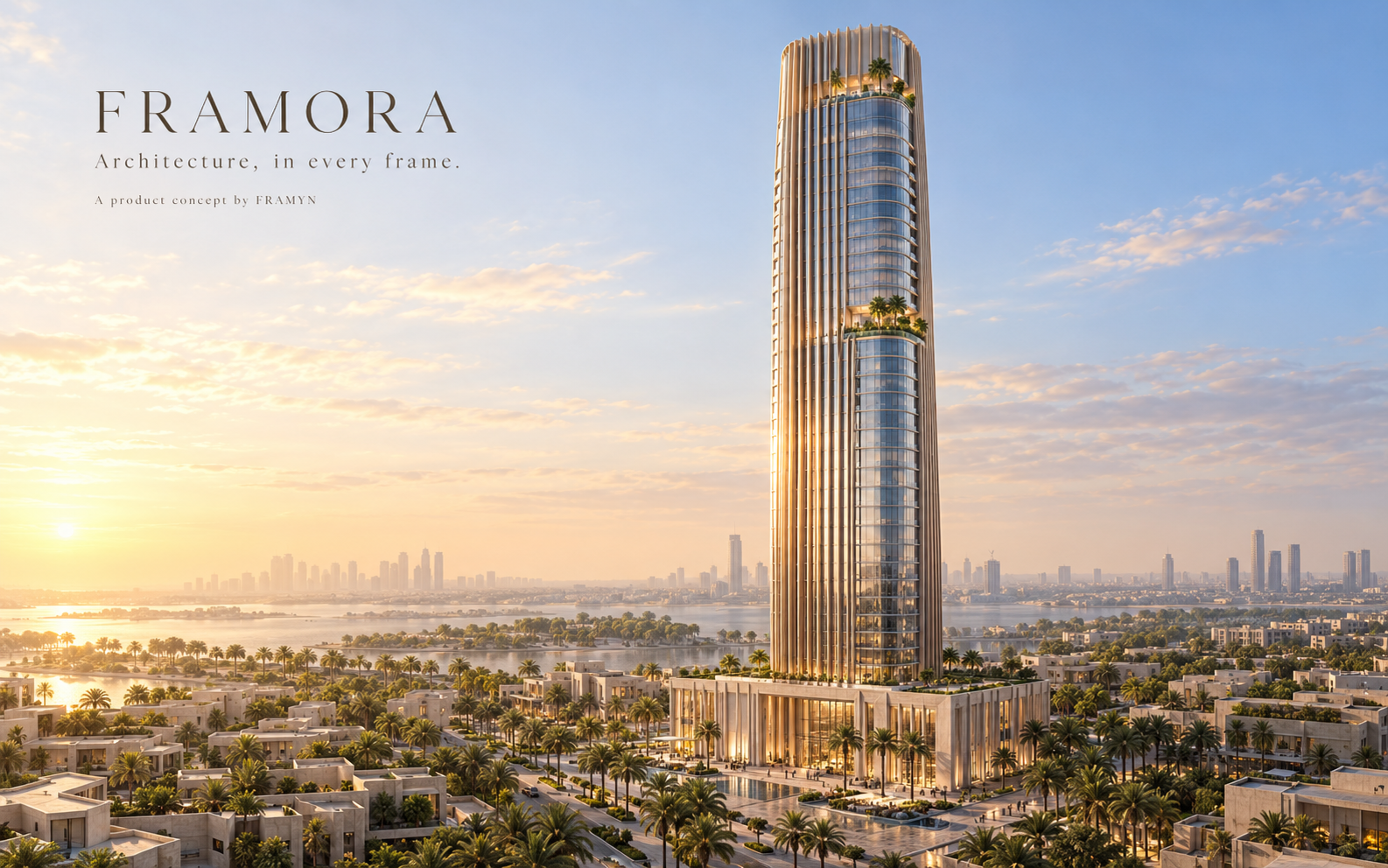
CLIENT
FRAMYN: Internal product concept
MY ROLE
Product & Experience Design, defining the render-sequence workflow and browser viewer concept.
DURATION
Concept & experience design stage
TOOLS
0%
OVERVIEW
Architectural visualization teams invest significant time in lighting, materials, landscaping, and scene composition, but a static render only shows the viewpoint its creator chose. Framora is conceived as a bridge between high-quality architectural rendering and direct client interaction.
Instead of transferring the full working scene into a browser, creators would upload an ordered sequence of renders captured around the building, and the viewer would move through those images in response to client input, creating a controlled 360-degree presentation.
THE PROBLEM
Large architectural scenes can combine complex geometry, high-resolution textures, detailed surroundings, and carefully tuned lighting. Bringing that entire scene into a web application often introduces substantial preparation, optimization, and compatibility work across devices and network conditions.
Static images and videos create another gap, they communicate the design, but clients cannot choose their next viewpoint around the building, and each additional angle request becomes another presentation task.
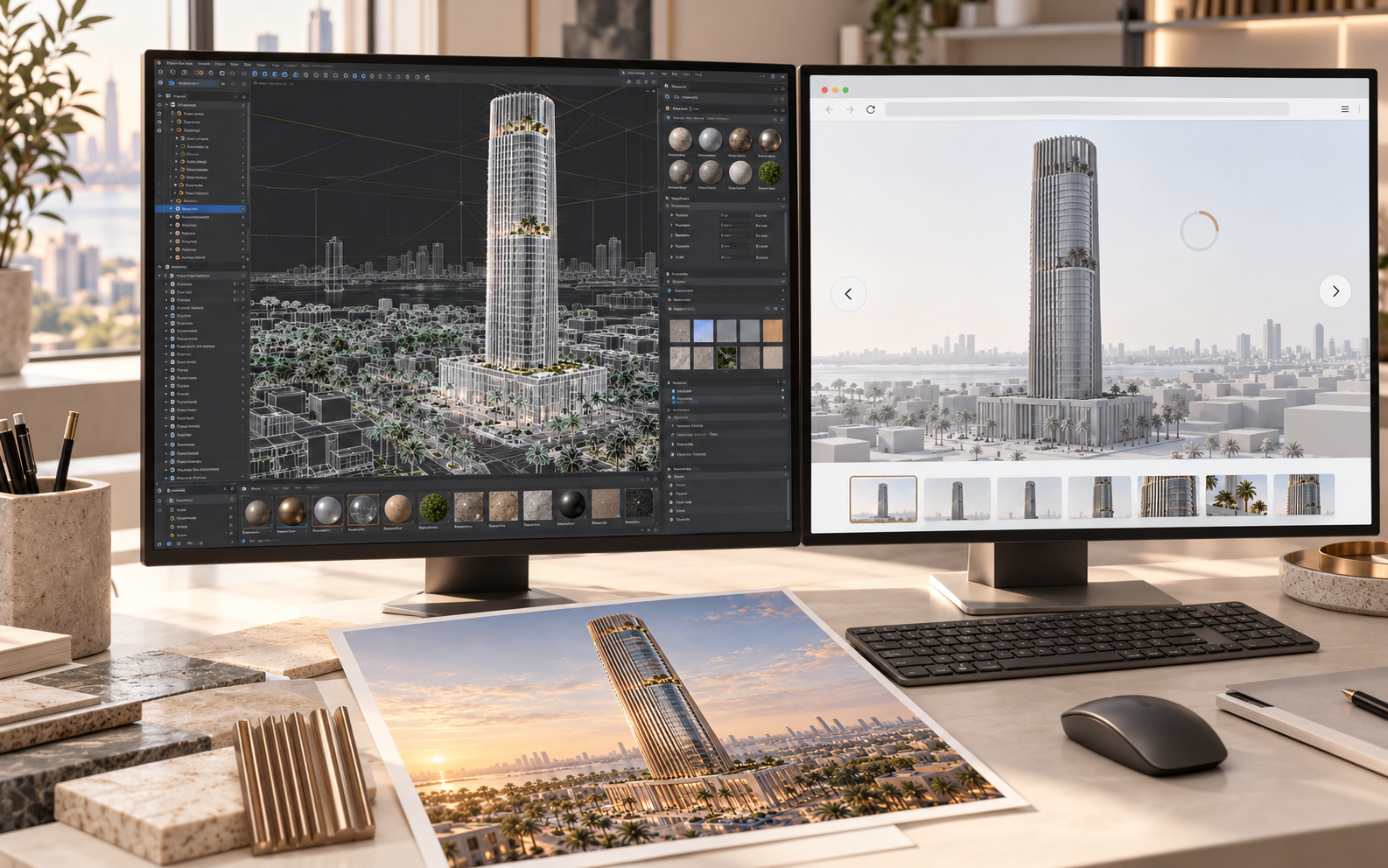
Interaction gaps mapped across static renders, video walkthroughs, and real-time browser scenes.
FIG 01 // DIAGNOSTIC
HOW WE FRAMED THE IDEA
The idea starts with an existing strength in the archviz workflow: creators already know how to produce the images that represent their design accurately. A creator would render the building from a consistent series of viewpoints around a full orbit, and Framora would map user input to the appropriate frame.
The product principle: the render defines the visual quality, the sequence defines the viewpoints, and the interface gives the client control. Moving left or right advances or reverses the viewpoint, with the end of the sequence wrapping back to its beginning.
ARCHITECTURAL THESIS
“The render already contains the detail, the interface just needs to make it explorable, not replace it with a different rendering environment.”
THINK & BUILD
The proposed workflow begins before upload: a creator captures a complete orbit using a consistent camera setup, image dimensions, lighting, and frame order. Within Framora, the creator would upload the sequence, review its order, and preview the rotation before it reaches a client.
The viewer is planned to translate drag, swipe, or left/right step controls into frame changes, with the full sequence wrapping continuously, while image loading and caching balance responsiveness against the size of the uploaded render assets.
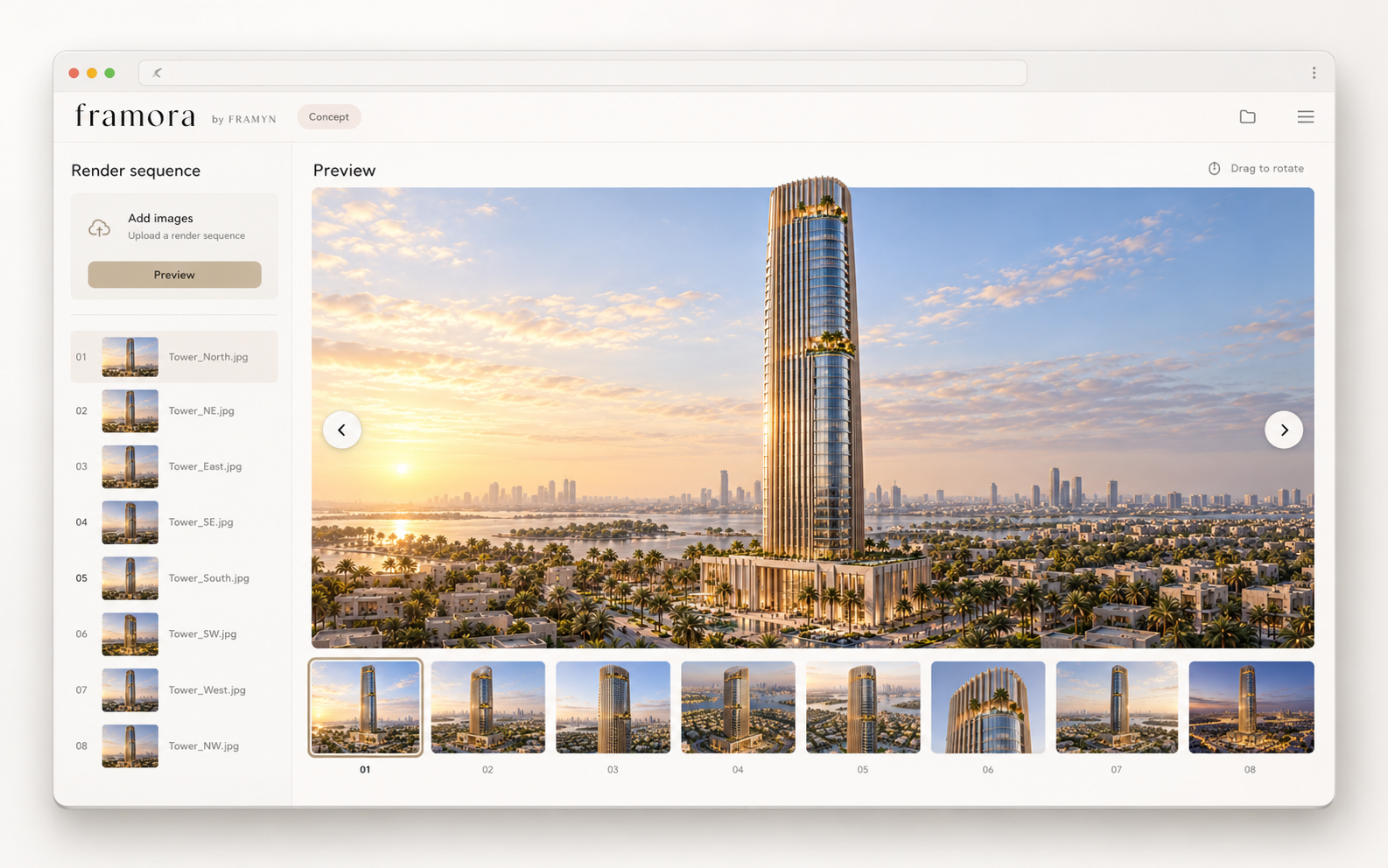
Planned sequence-to-presentation workflow, from render intake to the frame-based viewer.
FIG 02 // BUILD SPEC
THE SOLUTION
Framora is planned as a website where creators upload a building's rendered orbit and turn it into a client-controlled presentation, clients move around the building through ordered frames, viewing the materials, lighting, and environment already captured in the original renders.
The planned free version focuses on the essential experience of uploading, previewing, and rotating a sequence, with a direct path for teams to commission richer interactive enhancements, such as floor selection, contextual maps, and guided viewpoints, once a project needs more than exterior rotation.
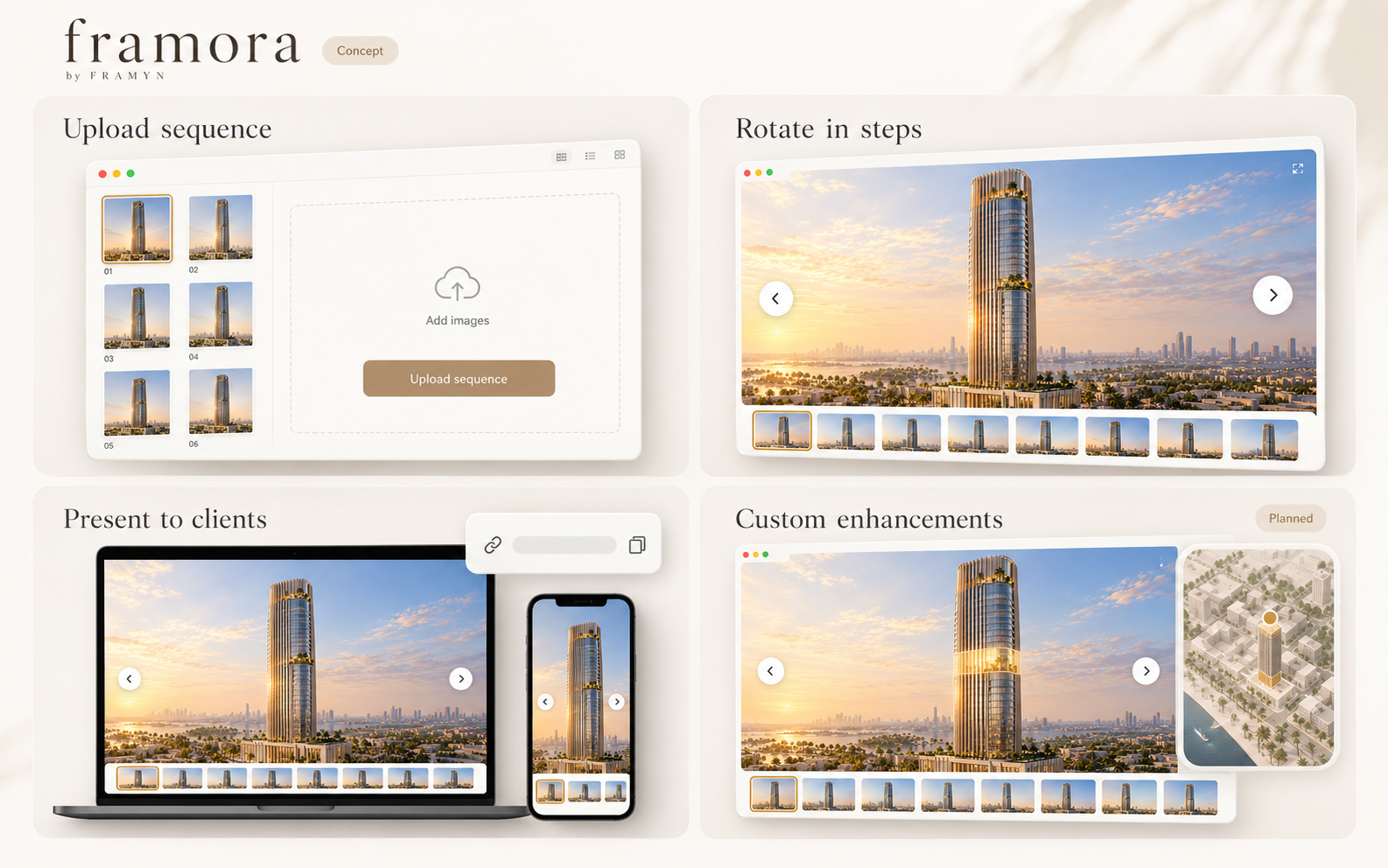
Framora: Concept interface for the render-sequence viewer.
FIG 03 // PRODUCTION
NEXT CASE STUDY (5/9)